
Comparing blind options in Singapore is not only about choosing a style that looks good. The right decision also depends on sunlight, privacy, room use, moisture, maintenance, and how the blind will perform in your specific home or apartment. With so many choices available, it helps to know what to check before you decide, so that the finished result suits both your window and your daily routine.
Start with the room’s purpose
The first thing to compare is how the room is used. A living room usually needs a balance of daylight and privacy, while a bedroom may need stronger light control for rest. Kitchens, bathrooms, study areas, and balcony-facing spaces often have different requirements again. A blind that works well in one room may feel inconvenient in another.
Think about whether the space is for relaxing, sleeping, working, entertaining, or occasional use. This helps you narrow down whether you need something light-filtering, room-darkening, moisture-resistant, or simply decorative. The more clearly you define the room’s purpose, the easier it is to compare options fairly.
Check light control and privacy levels
In Singapore, bright sun and close-facing neighbours make light control and privacy especially important. When comparing blind options, look at how much daylight enters the room during the day and how visible the interior is at night. Some blinds soften glare without blocking the view, while others provide a more closed-off finish.
If your window faces a corridor, a nearby block, or a busy street, privacy may matter more than a clear outside view. If the room gets direct afternoon sun, you may also want a blind that helps reduce glare on screens and furniture. Comparing how each option performs in actual daylight is more useful than judging style alone.
Review material suitability for Singapore’s climate
Humidity, heat, and occasional condensation can affect how blinds age. When comparing blind options, pay attention to the materials used and whether they are suitable for local conditions. Some materials are easier to maintain in a humid environment, while others may be more sensitive to warping, staining, or dust build-up.
For practical use, consider how often the blind will be exposed to moisture, cooking residue, or frequent handling. A beautiful finish is still important, but it should also be realistic for the room. Material choice can influence cleaning effort, appearance over time, and overall durability.
Measure the window and assess the fitting space
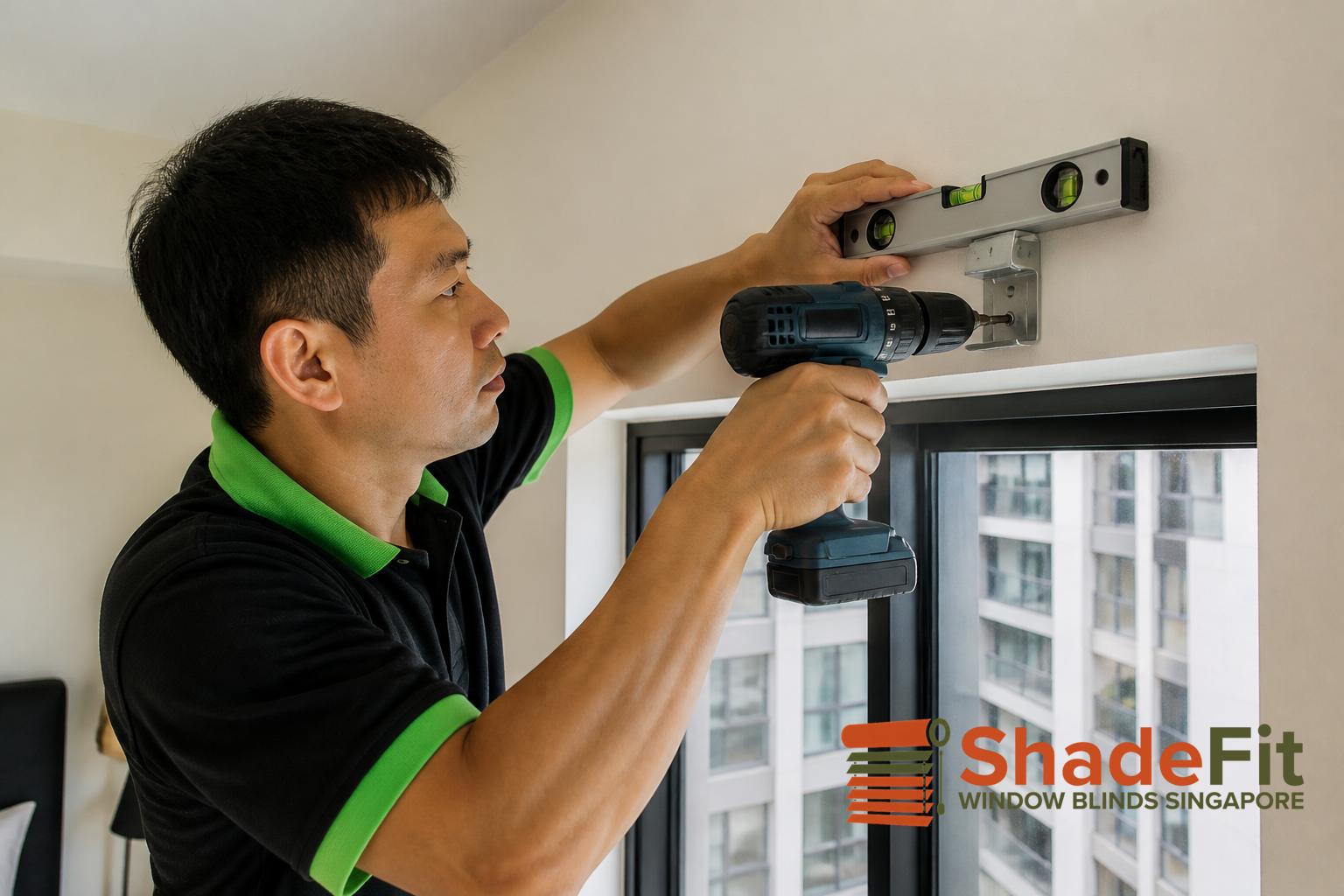
Blind performance depends heavily on correct sizing. Before comparing options, check the width, height, frame depth, and any obstructions around the window such as handles, grills, air-con ledges, or sliding doors. A blind may look suitable in a showroom but still be awkward if the actual window layout is unusual.
It is also worth considering whether you want an inside fit or outside fit. Inside fitting can give a neater appearance if the recess allows it, while outside fitting may offer better coverage for irregular openings or added light blockage. Accurate measurement is essential because a small mismatch can affect operation, coverage, and finish.
Think about how easy the blind is to operate
Some blinds are chosen mainly for their appearance, but day-to-day convenience matters just as much. Compare how each option opens, closes, lifts, tilts, or stacks. If the window is tall, wide, or difficult to reach, operation should be part of the decision from the start.
Families with children or older residents may also prefer a system that is simple and smooth to use. If you open and close the blind many times a day, a practical mechanism will often matter more than a highly decorative design. The best choice is usually the one that feels easy to live with over time.
Compare cleaning and long-term maintenance
All blinds require some care, but the effort involved can vary a lot. When comparing options, ask how dust is removed, whether the surface resists stains, and how often deeper cleaning may be needed. In Singapore homes, blinds near windows that stay open frequently can collect dust faster than expected.
It is sensible to choose a blind that suits your routine, not an ideal cleaning habit you may not keep up with. If you want something low-maintenance, compare finishes that are easier to wipe down and materials that do not need overly delicate handling. This is especially useful for busy households.
Match the blind style to the room’s look
Appearance still matters, but it should be considered alongside function. Compare how each blind option works with your flooring, wall colour, furniture, and overall interior style. A blind should feel like part of the room rather than an afterthought.
Some homeowners prefer a clean, minimal look, while others want a warmer or more decorative effect. The best way to compare styles is to imagine them in the actual room, in both daylight and evening lighting. What looks refined in a showroom may feel very different in a compact HDB room or a bright condominium unit.
Consider safety, practicality, and daily household use
When comparing blinds for family homes, safety and practicality should not be overlooked. Loose cords, awkward operating positions, and fragile components can become inconvenient in busy households. This matters even more in homes with young children, pets, or frequent guests.
Also think about furniture placement, access to windows, and how often the blind will need to be adjusted. A blind that looks attractive but gets in the way of opening windows or using a balcony door may not be the best long-term choice. Practical use should always be part of the comparison.
If you are comparing blind options for your Singapore home, you can WhatsApp ShadeFit Window Blinds Singapore – Venetian & Roller Blinds to discuss suitable blinds or related window-covering options and request a quotation based on your window size, property type, sunlight direction, privacy needs, preferred style and installation requirements: message us here.
Conclusion
Comparing blind options in Singapore becomes much easier when you focus on the factors that affect real daily use: room function, light control, privacy, material suitability, measurement, operation, maintenance, and overall style. By checking these points carefully, you are more likely to choose a blind that suits both your window and your lifestyle, rather than one that simply looks good at first glance.
Choose ShadeFit Window Blinds Singapore – Venetian & Roller Blinds
ShadeFit Window Blinds Singapore – Venetian & Roller Blinds Singapore provides practical window-covering solutions tailored to the way homeowners use each room. Before recommending any products or service options, we consider the window size, direction of sunlight, privacy requirements and preferred interior style to help homeowners select suitable window blinds for their space.
Our core blinds range includes roller blinds for a simple and practical finish, as well as venetian blinds for greater control over the direction of incoming light. Homeowners looking for a layered design can consider combi blinds, Korean blinds and Shangri-la blinds. For greater everyday convenience, smart blinds suit homeowners who want automated control as part of their daily routine, while motorised blinds make it easier to adjust wide or difficult-to-reach window coverings. Homeowners who prefer curtains can choose blackout curtains for stronger light coverage, dim out curtains for a softer level of light control, or a day curtain and night curtain combination for more flexible privacy. Smart curtains provide automated control, while motorised curtains make wide or difficult-to-reach curtains easier to operate.
View our completed projects and read our blog for more ideas and WhatsApp us at +65 8241 0032 to discuss your window requirements.
Frequently Asked Questions
What is the most important factor when comparing blind options?
The most important factor is how the blind will be used in that specific room. A bedroom, living room, study, or kitchen may each need a different balance of light control, privacy, and ease of use.
Should I prioritise style or practicality?
Both matter, but practicality should come first. A blind that suits the room’s function, window size, and sunlight exposure is more likely to remain useful and comfortable over time.
Why does measurement matter so much for blinds?
Because even a visually suitable blind can perform poorly if the dimensions are wrong. Accurate measurement helps ensure proper coverage, neat fitting, and smooth operation, especially for windows with grills, handles, or unusual recesses.
