
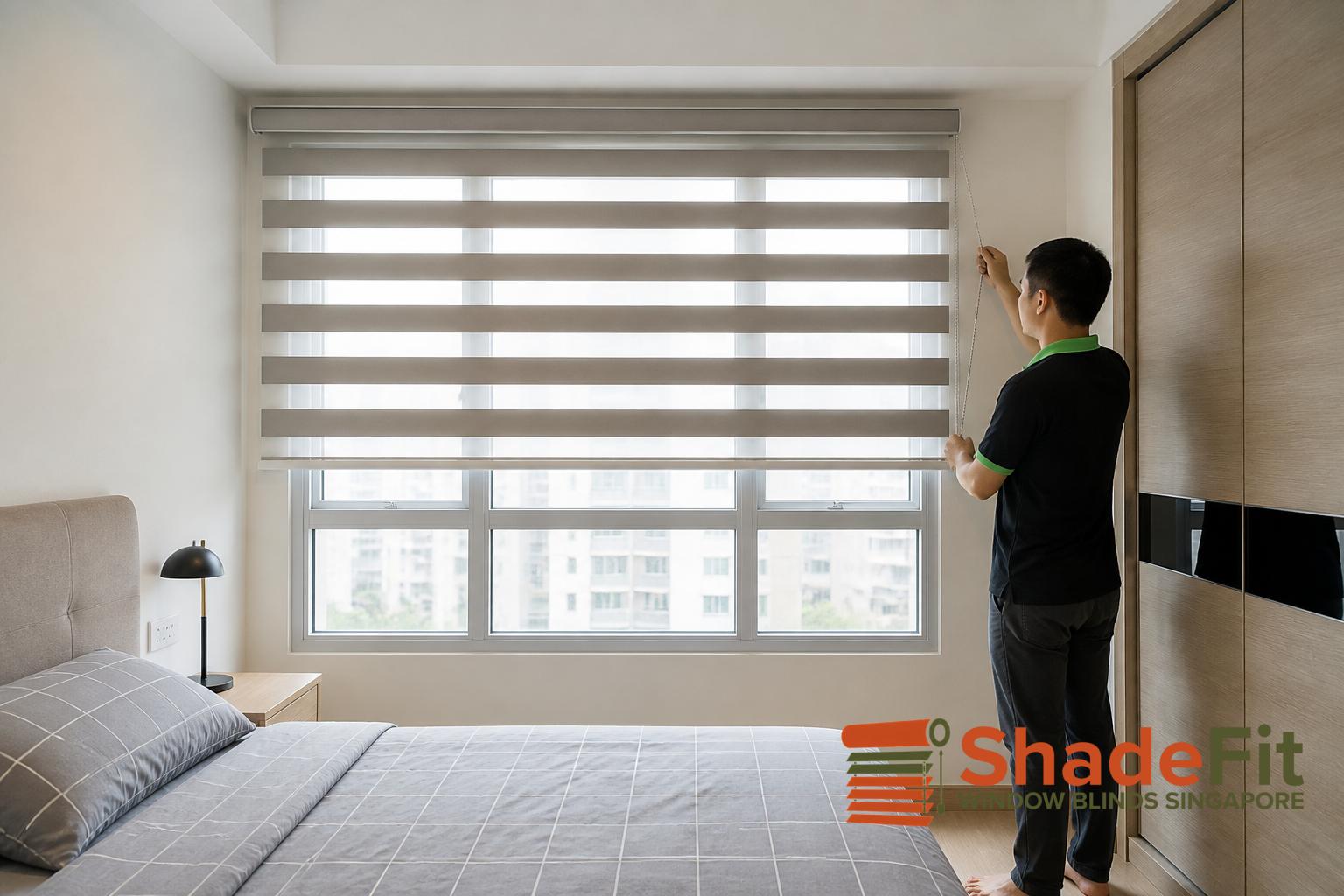
Installing blinds in Singapore HDB flats is usually straightforward, but it works best when the process is planned around the flat’s window type, wall condition, and daily use of each room. In HDB homes, the right installation method matters just as much as the blind itself, because proper fitting affects privacy, light control, neatness and long-term stability. Whether you are fitting roller blinds, Venetian blinds, blackout blinds or another common type, understanding how the installation is carried out helps you prepare your space and make practical choices.
Start with the window layout in your HDB flat
Before any drilling or mounting begins, the installer will look at the window frame, surrounding wall space and the overall layout of the room. HDB flats often have aluminium casement windows, sliding windows, full-height openings or service yard windows, and each one may need a slightly different approach. The installer must also check whether the blind will sit inside the recess, on the window frame, or above the frame for better coverage.
This stage is important because HDB windows are not all the same size, and even small differences can affect how smoothly the blind operates. A bedroom window may need a neater fit for better light control, while a living room window may prioritise coverage across a wider span. Accurate assessment at the start helps avoid gaps, uneven alignment and awkward operation later on.
Taking accurate measurements before installation
Measurements are one of the most important parts of blind installation in Singapore HDB flats. The width and height must be recorded carefully so the blind covers the intended area without rubbing against the wall, window handle or grille. If the blind is being installed in a recess, the installer will usually measure the internal opening. If it is mounted outside the recess, the blind may be sized to extend beyond the frame for better privacy and light blocking.
For HDB homes, it is also worth checking the depth available for the blind mechanism. Some window openings have limited depth, which can affect whether certain blind styles fit neatly inside the recess. A precise measurement reduces the risk of remakes and helps the blind function smoothly from the first day.
Choosing between drill-fixed and no-drill installation
Many HDB residents ask whether blinds can be installed without drilling. In some situations, no-drill or adhesive-based options may be suitable, particularly for lighter blinds or temporary needs. These methods can be useful for tenants or homeowners who prefer minimal wall alteration, but they are not ideal for every blind type or every window condition.
Drill-fixed installation remains common for many HDB flats because it usually offers stronger support and better durability, especially for larger or heavier blinds. The choice depends on the blind weight, the surface condition, and how permanently you want the blind to stay in place. A proper installer will assess whether the blind can be safely supported without compromising stability.
What happens during the actual fitting process
Once measurements are confirmed, the installer marks the fixing points, checks alignment and prepares the mounting brackets. In HDB flats, care is usually taken to ensure the blind is level, as even a slight tilt can cause uneven rolling, slanted slats or difficulty when opening and closing. Brackets are then secured before the blind mechanism is attached and tested.
The process may also include checking the blind’s clearance from the window handle, sill or wall features. After fitting, the installer will test the blind several times to make sure it rolls up, lowers or tilts properly. If the blind includes a bottom rail, chain or cord system, these components are adjusted so the blind operates comfortably and safely in the room.
How different blind types are installed in HDB homes
Different blind styles need different installation methods. Roller blinds are usually mounted with side brackets and a roller tube, making them a common choice for HDB bedrooms, living rooms and study areas. Venetian blinds require accurate bracket positioning so the slats tilt evenly and do not strike the window frame. Heavier blinds such as blackout or layered options may need stronger fixings and more careful support.
For HDB flats, the blind type should match the room’s purpose as well as the window size. A kitchen or service yard may benefit from a simpler, easy-to-clean blind, while a bedroom may need better light control and privacy. The installation method should always suit the blind’s operating mechanism, material weight and the conditions around the window.
Common issues installers check for in HDB flats
Good blind installation is not only about attaching brackets. Installers also check for uneven walls, tight corners, obstructing handles and limited clearance around the window. These issues are fairly common in residential settings and can affect how a blind sits once installed. If the blind is too close to a handle or window latch, it may be difficult to operate both the window and the blind comfortably.
In some flats, the installer may need to suggest a slight adjustment in positioning to ensure the blind clears the window frame properly. They may also check whether the blind will interfere with curtains, grilles or other fittings already in place. This kind of practical assessment helps the finished installation look neater and work better in day-to-day use.
Safety, durability and everyday maintenance
Safety is an important consideration, especially in homes with children or elderly residents. Cords, chains and other operating parts should be fitted securely and positioned sensibly so they do not hang awkwardly or become a nuisance. A well-installed blind should feel stable when operated and should not wobble excessively or come loose with regular use.
Maintenance is usually simple after installation. Most blinds only need regular dusting or light cleaning, depending on the material. It is still important to inspect the fixings occasionally, especially in humid Singapore conditions, to make sure screws, brackets and moving parts remain in good condition. Proper installation from the outset often reduces future issues and helps the blind last longer.
If you are planning blind installation for your HDB flat and want to check which style, mounting method and fitting approach suit your windows best, you can WhatsApp ShadeFit Window Blinds Singapore – Venetian & Roller Blinds to discuss suitable options and request a quotation based on your window size, property type, sunlight direction, privacy needs, preferred style and installation requirements: Message on WhatsApp.
Conclusion
Installing blinds in Singapore HDB flats is a practical process, but it works best when measurements, blind type and mounting method are chosen carefully for the specific window. From checking recess depth to deciding between drill-fixed and no-drill options, each step affects how neatly the blind fits and how well it performs over time. When the installation is planned properly, the result is a cleaner finish, smoother operation and better everyday comfort in the home.
Choose ShadeFit Window Blinds Singapore – Venetian & Roller Blinds
ShadeFit Window Blinds Singapore – Venetian & Roller Blinds Singapore offers a range of products and service options suited to different window sizes, room uses and interior preferences. We help homeowners select window blinds based on the direction of sunlight, the level of privacy required and the overall look of the space. Our blinds selection includes roller blinds for a clean and practical finish, while venetian blinds allow homeowners to adjust the direction of incoming light. Combi blinds, Korean blinds and Shangri-la blinds offer layered designs for homeowners who want to balance light, privacy and appearance. Smart blinds and motorised blinds provide more convenient everyday control, particularly for wide or difficult-to-reach windows. Careful measurement and professional installation help ensure the selected blinds are fitted neatly and correctly.
For homeowners who prefer a softer window finish, our curtains selection includes blackout curtains for stronger light coverage, a day curtain and night curtain combination for flexible privacy, and dim out curtains for a gentler level of light control. Smart curtains and motorised curtains make daily adjustments easier and more convenient.
View our completed projects and read our blog before choosing what works best for your space and WhatsApp us at +65 8241 0032 today to discuss your window requirements to receive suitable recommendations.
Frequently Asked Questions
Can blinds be installed on all HDB windows?
Most HDB windows can accommodate blinds, but the exact installation method depends on the window design, available depth and surrounding fittings. Some windows are better suited to inside mounting, while others work better with outside mounting for fuller coverage.
Are no-drill blinds suitable for HDB flats?
No-drill blinds can be suitable for certain windows and lighter blind types, especially when minimal wall alteration is preferred. However, they are not always appropriate for heavier blinds or every surface condition, so the installer should assess suitability first.
How do I know which blind installation method is best?
The best method depends on the blind weight, window layout, wall condition and how permanent you want the installation to be. A site assessment and accurate measurement usually provide the clearest guidance before fitting begins.
