
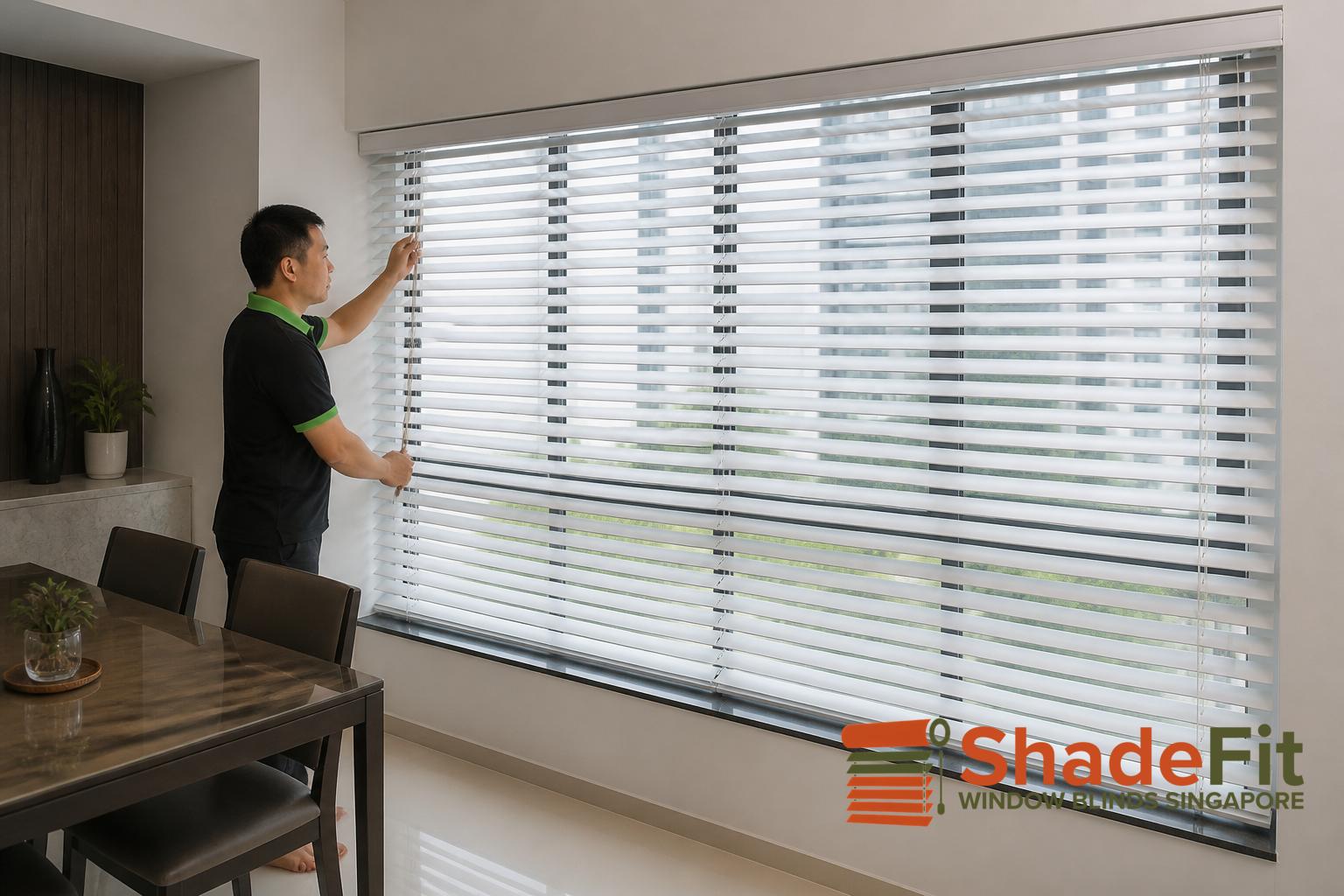
Singapore’s warm, humid weather makes material choice especially important when selecting Venetian blinds. While the style is valued for its clean lines, light control and adjustable privacy, not every material performs equally well in a home that deals with moisture, heat and frequent condensation. The right choice can help blinds stay attractive for longer, reduce warping or corrosion, and make everyday maintenance much easier.
Why humidity matters for Venetian blinds
In Singapore, humidity is not just a comfort issue; it affects how window coverings age over time. Blinds near kitchen sinks, bathroom windows, service yards or east- and west-facing openings may be exposed to moisture, steam and strong sun on a regular basis. Over time, these conditions can cause certain materials to warp, fade, rust or become difficult to clean.
Venetian blinds depend on straight, evenly spaced slats to function well. If the material bends or deteriorates, the slats may stop tilting smoothly or the blind may look uneven. That is why the climate should be considered just as carefully as colour, slat width or room style.
Aluminium Venetian blinds: a practical choice for humid homes
Aluminium is one of the most suitable materials for Singapore’s humid climate. It does not absorb moisture, so it is less likely to warp or swell when exposed to damp air. This makes it a reliable option for areas where the blinds may face daily condensation or occasional splashes.
Another advantage is maintenance. Aluminium Venetian blinds are generally easy to wipe down with a soft cloth, which suits busy households that want a low-fuss option. They are also lightweight, which helps the slats tilt and raise smoothly without putting unnecessary strain on the mechanism.
For rooms such as kitchens, bathrooms with windows, laundry areas and utility spaces, aluminium often offers the best balance of durability, practicality and appearance.
Faux wood Venetian blinds for a wood-look finish without the moisture risk
Faux wood Venetian blinds are made from moisture-resistant composite materials rather than natural timber. They are a sensible option for homeowners who like the warmth of a timber look but need something better suited to Singapore’s humidity. Because they are less affected by damp air than real wood, they are often chosen for living rooms, bedrooms and dining areas.
These blinds also tend to be easier to maintain than natural wood. Dusting and light cleaning are usually sufficient for regular upkeep. In addition, faux wood slats often feel more substantial than aluminium, which can suit interiors that aim for a classic or more homely look.
It is worth noting that faux wood can be heavier than aluminium, so window size and operating mechanism should be considered during selection, especially for wider windows.
Real wood Venetian blinds and when they are best avoided
Natural wood Venetian blinds can look elegant and bring a rich, textured finish to a room. However, in Singapore’s humid climate, they need more care than other material options. Wood naturally expands and contracts with changes in moisture, which can eventually affect the shape of the slats or the smoothness of operation.
For that reason, real wood is usually better suited to dry, well-ventilated spaces away from direct moisture. If used in bedrooms, studies or living areas with controlled air-conditioning, they can perform well when properly maintained. Even so, homeowners should be prepared for more frequent cleaning and occasional checks for signs of warping or surface wear.
In high-moisture zones, real wood is usually not the most practical choice. For those spaces, moisture-resistant alternatives are generally a safer long-term option.
What to consider for kitchens, bathrooms and service areas
Room function should guide the material choice as much as climate. Kitchens often deal with steam, heat and airborne grease, while bathrooms and laundry spaces can have regular moisture exposure. In these locations, the best Venetian blind material is one that handles humidity well and can be cleaned without difficulty.
For these areas, consider:
- Aluminium for high moisture resistance and easy cleaning
- Faux wood for a decorative look where humidity is moderate
- A finish that resists staining if the blind is near cooking or water activity
It is also sensible to think about ventilation. Even if a room is not directly wet, poor airflow can still expose blinds to damp conditions. Choosing a material that tolerates humidity helps reduce maintenance concerns in the long run.
How sunlight, heat and window position affect material choice
Singapore homes often deal with strong daylight, particularly on west-facing windows in the afternoon and east-facing windows in the morning. Intense sun can make some materials fade or become brittle over time, so the climate challenge is not only about humidity but also heat and UV exposure. Venetian blinds should be chosen with both factors in mind.
Aluminium generally handles sun exposure well and remains dimensionally stable. Faux wood is also commonly chosen because it is more tolerant of changing conditions than natural timber. Real wood can work in shaded or air-conditioned rooms, but it is more likely to require careful placement and upkeep.
For windows that receive direct sun as well as humid air, homeowners should look for materials and finishes that are designed for stability, easy cleaning and everyday use.
Matching the material to the room and lifestyle
The best Venetian blind material is not always the most premium-looking one; it is the one that fits the room and the household’s habits. A family with young children may prefer something durable and easy to wipe down. A homeowner who values a softer, warmer interior might choose faux wood for living spaces, while keeping aluminium for wet areas.
It is also helpful to consider how often the blinds will be adjusted. If the slats will be tilted multiple times a day for light control, a lighter material may feel more convenient. If the blinds are mainly decorative and only occasionally adjusted, appearance may matter more than operational ease.
For Singapore homes, the most practical approach is usually to balance style with climate resistance, rather than choosing based on looks alone.
If you are comparing Venetian blind materials for a specific room in Singapore, you can WhatsApp ShadeFit Window Blinds Singapore – Venetian & Roller Blinds to discuss suitable options and request a quotation based on your window size, property type, sunlight direction, privacy needs and installation requirements.
Conclusion
For Singapore’s humid climate, aluminium Venetian blinds are usually the most straightforward and durable choice, especially for kitchens, bathrooms and utility areas. Faux wood is a strong alternative when you want a warmer, timber-like appearance with better moisture resistance. Real wood can still be suitable in drier, well-maintained rooms, but it generally demands more care and is less forgiving in damp conditions.
By matching the material to the room’s exposure to moisture, heat and sunlight, homeowners can choose Venetian blinds that remain practical, attractive and easier to maintain over time.
Choose ShadeFit Window Blinds Singapore – Venetian & Roller Blinds
ShadeFit Window Blinds Singapore – Venetian & Roller Blinds Singapore provides practical window-covering solutions tailored to the way homeowners use each room. Before recommending any products or service options, we consider the window size, direction of sunlight, privacy requirements and preferred interior style to help homeowners select suitable window blinds for their space.
Our core blinds range includes roller blinds for a simple and practical finish, as well as venetian blinds for greater control over the direction of incoming light. Homeowners looking for a layered design can consider combi blinds, Korean blinds and Shangri-la blinds. For greater everyday convenience, smart blinds suit homeowners who want automated control as part of their daily routine, while motorised blinds make it easier to adjust wide or difficult-to-reach window coverings. Homeowners who prefer curtains can choose blackout curtains for stronger light coverage, dim out curtains for a softer level of light control, or a day curtain and night curtain combination for more flexible privacy. Smart curtains provide automated control, while motorised curtains make wide or difficult-to-reach curtains easier to operate.
View our completed projects and read our blog for more ideas and WhatsApp us at +65 8241 0032 to discuss your window requirements.
Frequently Asked Questions
Are aluminium Venetian blinds better than wood in Singapore?
For humid conditions, aluminium is usually more practical because it resists moisture and is easier to clean. Wood may look warmer, but it is more sensitive to humidity and may require more maintenance.
Can faux wood Venetian blinds be used in bathrooms?
They can be used in some bathrooms if moisture exposure is not excessive and ventilation is decent. However, aluminium is often the safer choice for areas with regular steam or splashes.
How do I keep Venetian blinds in good condition in a humid home?
Regular dusting, light wiping with a soft cloth and avoiding prolonged exposure to standing moisture can help. Choosing a material suited to the room also makes ongoing care much easier.
