
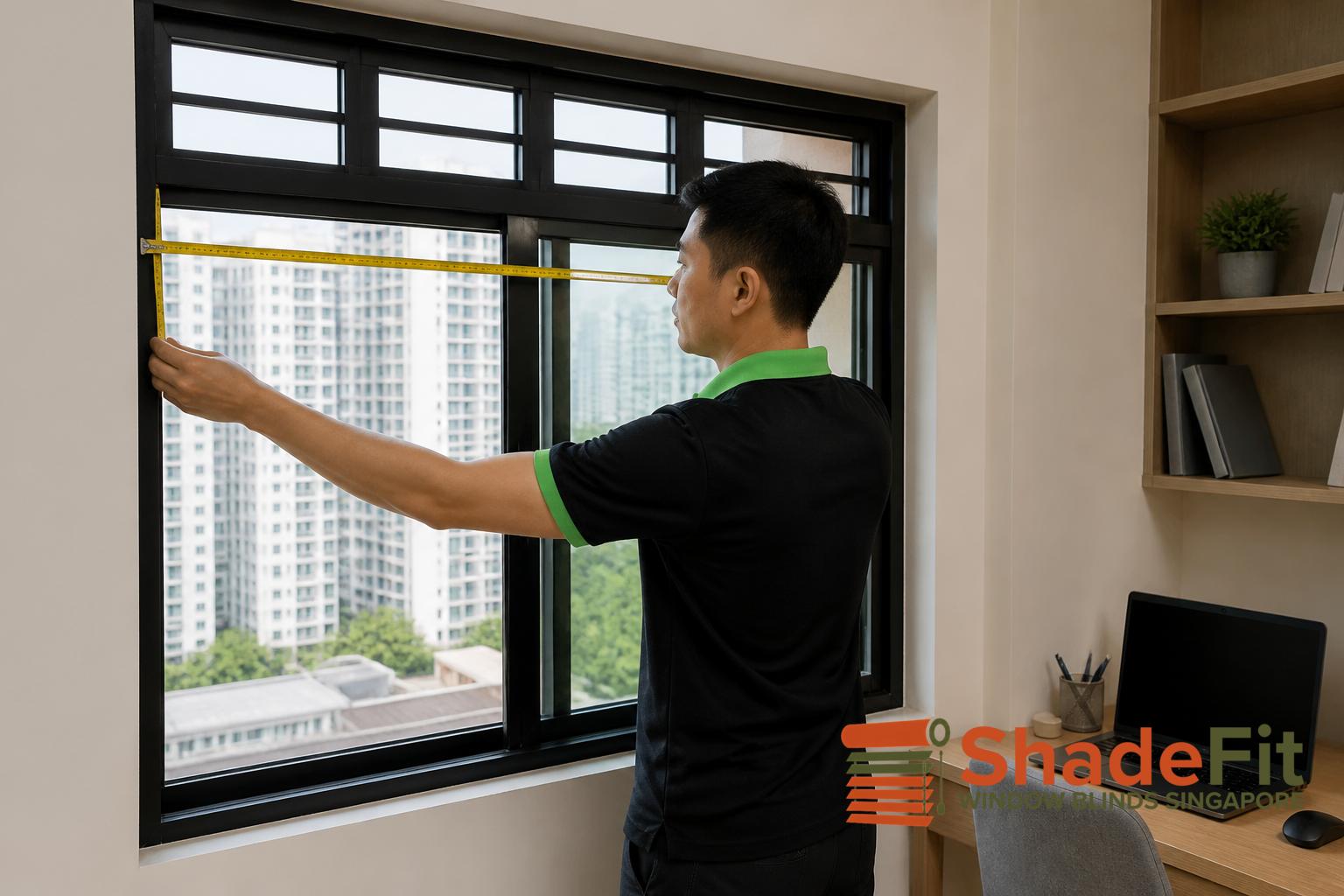
Installing Venetian blinds on HDB windows is usually straightforward, but it still needs careful planning because HDB homes have a mix of window types, frame depths and ventilation requirements. A good installation should suit the window structure, allow the slats to open fully, and not interfere with daily use of the window or grille, if one is present. For Singapore households, the main considerations are sunlight control, privacy, ease of cleaning and a neat finish that works with compact living spaces.
What makes HDB windows different for Venetian blind installation
HDB flats often have aluminium casement windows, sliding windows, or a combination of window panels with grilles. These details affect where the blind can be mounted and how much clearance is available. Venetian blinds need enough space for the headrail, slat movement and tilting mechanism to operate properly without rubbing against the frame.
In many homes, the installer will first check whether the blind should be fitted inside the window recess or on the wall above the frame. Inside mounting gives a cleaner, more integrated look, but it depends on sufficient recess depth. Outside mounting can cover a wider area and is often used when the window frame is shallow or when better light block-out at the edges is needed.
Measuring the window before fitting begins
Accurate measuring is the most important part of Venetian blind installation. The installer will normally measure the width and height at more than one point because HDB window frames are not always perfectly even. Small differences can affect whether the blind sits neatly and whether the slats move freely.
Measurements also need to account for surrounding features such as handles, locks, grilles, ventilation gaps and tiled ledges. If the blinds are installed too close to a handle or frame edge, the slats may not tilt properly. If the blind is too narrow, too much light will enter at the sides; if it is too wide, it may obstruct the window.
A careful site check also helps determine whether multiple blinds are needed for a long window run. In some HDB layouts, separate blinds for each panel are more practical than one wide blind across the full opening.
Inside mount or outside mount for HDB flats
For Venetian blinds, the mounting style depends on the available space and the intended appearance. An inside mount fits within the window recess and usually looks more tailored. It works well when the frame depth is sufficient and when the blind can be opened without touching the glass or hardware.
An outside mount is fixed above or around the window opening and can be useful when the recess is too shallow, uneven, or interrupted by obstacles. It may also be preferred if the homeowner wants greater privacy or a broader visual coverage of the window area. In HDB homes, outside mounting is often chosen for practical reasons rather than purely decorative ones.
Both methods can work well when measured correctly. The choice should be based on the window structure, room use and how much control over daylight is needed.
How the blind is fixed to the window or wall
The installer typically marks the bracket positions first, then secures the brackets using suitable screws and anchors for the surface. In HDB flats, the mounting surface may be concrete, tile, plaster or metal, so the fixing method should match the material. Once the brackets are level and firmly attached, the headrail is clipped or slotted into place.
After that, the cord, wand or tilt mechanism is checked to make sure the slats turn smoothly and the blind rises evenly. If the blind is motorised, the installer would also test the power connection and operation, though most Venetian blinds in HDB homes are manual. The final step is a function check to confirm that the blind opens, closes and tilts without snagging.
For windows with grilles, installers may need to position the blind so it clears the grille bars. This avoids awkward contact and keeps access to the window for cleaning and ventilation.
Choosing the right Venetian blind material for HDB living
Material choice affects both the installation outcome and everyday use. Aluminium Venetian blinds are popular in Singapore because they are light, moisture-resistant and easy to maintain. They suit kitchens, service yards and rooms where practicality is more important than a soft decorative finish.
Wooden or faux-wood Venetian blinds may be better for bedrooms and living areas if the homeowner wants a warmer look. However, these options are generally heavier, so the installation needs solid fixing points and enough clearance for the blind stack when raised. In humid spaces, material durability should be considered carefully.
When choosing the slat width, remember that wider slats can offer a more open view when tilted, while narrower slats give finer light control. The best option depends on the size of the window and the amount of daylight the room receives.
Why installation height and clearance matter
The blind should be mounted high enough to avoid blocking the window opening and low enough to look balanced within the room. In compact HDB homes, even a small positioning error can make the window feel crowded or reduce the effectiveness of the blind. Clearance is especially important near top-hung windows, handles and air vents.
If the blind hangs too low, it may interfere with movement around the window area or make cleaning more difficult. If it sits too high, it may leave too much exposed glass and reduce privacy. A proper installation takes both aesthetics and daily function into account.
It is also wise to think about how the room is used. Bedrooms may need closer edge coverage for privacy, while living rooms may prioritise light adjustment and a tidier visual line.
Common installation issues and how they are avoided
One common issue is choosing the wrong measurement method for the mount type. Inside mounts and outside mounts are measured differently, so the installer must know in advance which approach is being used. Another issue is insufficient depth, which can stop the blind from sitting properly in the recess.
Other problems include uneven walls, misaligned brackets and interference from grilles or window handles. These are usually avoided through careful on-site assessment and by checking all measurement points before drilling. In some cases, the blind may need a slight adjustment in size or bracket position to achieve a neat fit.
It is also important to test the blind after fitting. Venetian blinds should raise evenly, lower smoothly and tilt without resistance. If anything feels stiff or catches at one side, the alignment should be corrected immediately.
Maintaining Venetian blinds after installation
Once installed, Venetian blinds are fairly simple to maintain. Regular dusting helps keep the slats clean, particularly in Singapore where humidity and airborne dust can build up quickly. A soft cloth, duster or vacuum brush attachment can be used for routine care, depending on the slat material.
For aluminium blinds, occasional wiping with a damp cloth may be enough. For wood or faux-wood blinds, it is better to avoid excessive moisture and follow the material’s care instructions. Good maintenance also protects the operating mechanism and helps the blind continue to open and close smoothly.
If the blinds are installed near cooking areas, service yards or windows that are often opened, they may need more frequent cleaning. That is another reason installation placement matters from the start.
If you are planning Venetian blinds for an HDB flat and want advice based on your window size, room layout, sunlight direction and installation needs, you may WhatsApp ShadeFit Window Blinds Singapore – Venetian & Roller Blinds to discuss suitable options and request a quotation: message us here.
Conclusion
Venetian blinds can be installed successfully on HDB windows when the measurements, mounting style and clearance are planned properly. The key is to match the blind to the specific window structure rather than forcing a one-size-fits-all approach. With the right fit, Venetian blinds can provide practical light control, privacy and a clean finish that suits everyday HDB living.
Choose ShadeFit Window Blinds Singapore – Venetian & Roller Blinds
ShadeFit Window Blinds Singapore – Venetian & Roller Blinds Singapore offers a range of products and service options suited to different window sizes, room uses and interior preferences. We help homeowners select window blinds based on the direction of sunlight, the level of privacy required and the overall look of the space. Our blinds selection includes roller blinds for a clean and practical finish, while venetian blinds allow homeowners to adjust the direction of incoming light. Combi blinds, Korean blinds and Shangri-la blinds offer layered designs for homeowners who want to balance light, privacy and appearance. Smart blinds and motorised blinds provide more convenient everyday control, particularly for wide or difficult-to-reach windows. Careful measurement and professional installation help ensure the selected blinds are fitted neatly and correctly.
For homeowners who prefer a softer window finish, our curtains selection includes blackout curtains for stronger light coverage, a day curtain and night curtain combination for flexible privacy, and dim out curtains for a gentler level of light control. Smart curtains and motorised curtains make daily adjustments easier and more convenient.
View our completed projects and read our blog before choosing what works best for your space and WhatsApp us at +65 8241 0032 today to discuss your window requirements to receive suitable recommendations.
Frequently Asked Questions
Can Venetian blinds be installed on all HDB windows?
Most HDB windows can support Venetian blinds, but the exact installation depends on the window type, available recess depth and any obstructions such as handles or grilles. A site check is usually needed before deciding on the mounting method.
Do Venetian blinds need drilling for HDB installation?
In many cases, yes. Venetian blinds are usually secured with brackets that are screwed into the wall, frame or ceiling area above the window opening. The installer will choose suitable fixings based on the surface material and layout.
Are aluminium Venetian blinds better for HDB flats?
Aluminium Venetian blinds are often chosen for HDB homes because they are lightweight, practical and easy to clean. However, the best material depends on the room, humidity levels and the look the homeowner wants to achieve.
