
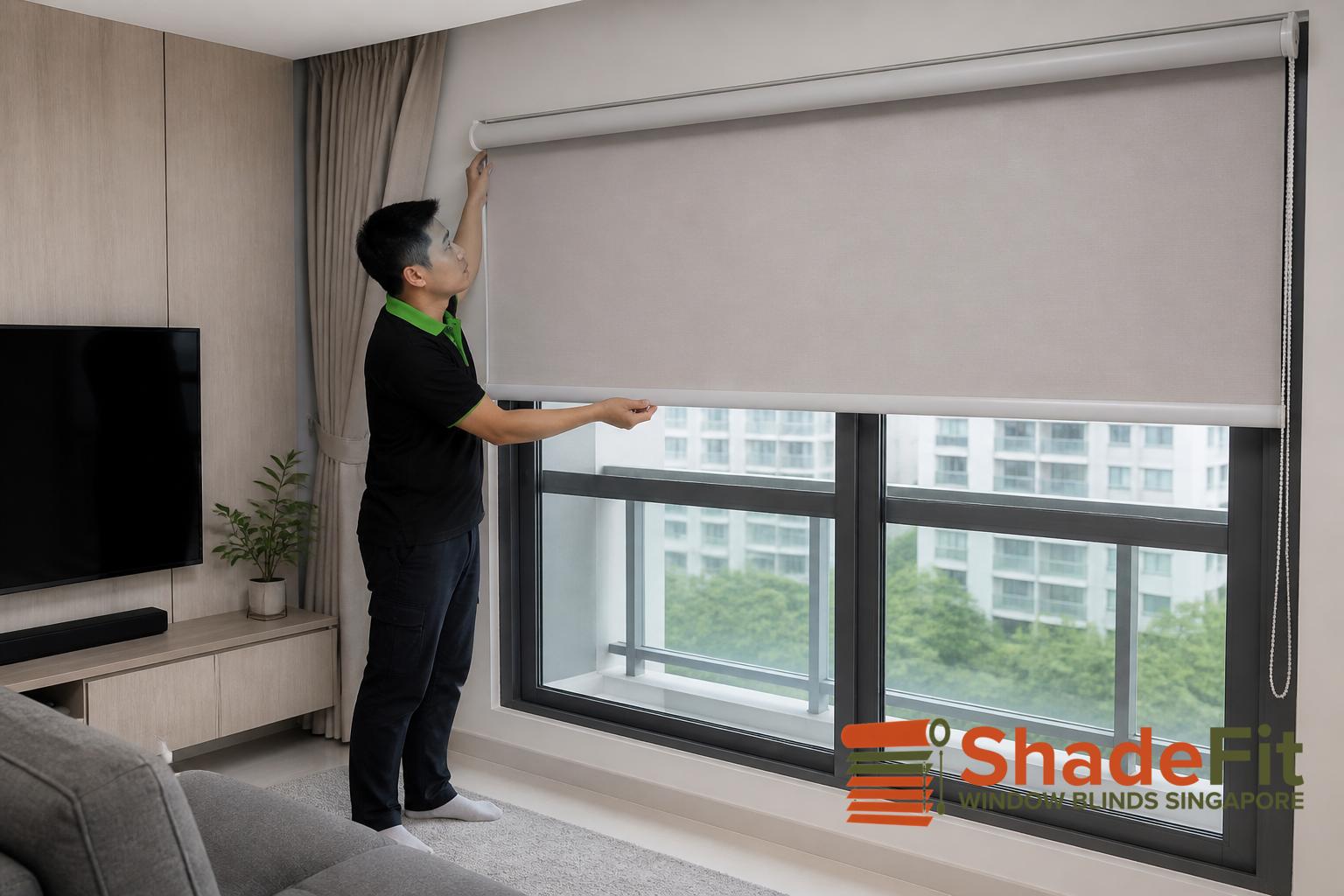
Motorised roller blinds can be a practical upgrade for Singapore homes, especially when you want easier light control, cleaner lines and better convenience in everyday use. Before placing an order, it helps to look beyond the fabric colour or the idea of automation and check whether the blinds suit your window, your room use and your installation conditions. A careful check at the beginning can prevent costly adjustments later.
Start with the window type and opening style
The first thing to confirm is what kind of window you have. In Singapore, motorised roller blinds may be fitted to HDB living rooms, condominium bedrooms, study areas, balcony doors or landed-home openings, but each location can have different constraints. The width, height, wall depth and available mounting space all affect whether the blind can be installed neatly and operate properly.
Also consider how the window opens. Casement windows, sliding windows and full-height glass panels all require slightly different planning. A motorised roller blind should not interfere with handles, locks, grilles or doors, and there should be enough clearance for the roller system and casing.
Check the purpose of the room before choosing the fabric
Motorised roller blinds are not a one-fabric-fits-all solution. The right material depends on how the room is used. For bedrooms, privacy and dimming may matter most. For living rooms, you may want daylight control without making the space feel too dark. For a home office or study, reducing glare on screens could be the main priority.
In Singapore’s bright climate, the direction of sunlight is also important. West-facing rooms often need stronger light filtering in the late afternoon, while north- or east-facing rooms may be easier to manage. Consider whether you need a translucent, light-filtering or blackout roller blind, and whether the finish should be soft, textured or minimal.
Understand how the motor will be powered
One of the most important checks is the power source. Motorised roller blinds usually run on rechargeable battery motors or wired systems. Battery-operated options are often simpler for retrofit projects because they may not need new wiring, but you should still ask how often the battery needs charging and where the charging point is located.
Wired systems may be suitable for new builds, renovations or locations where concealed wiring is already planned. In either case, make sure you know whether the motor, charger or power point will be visible and how the setup will affect the final appearance of the window area.
Confirm measurements carefully before ordering
Accurate measurement is essential for motorised roller blinds. A small error can lead to poor coverage, awkward gaps or a blind that cannot roll smoothly. Check whether the supplier is measuring for inside mount or outside mount installation, as each method affects the finished look and the amount of light blocking.
Before ordering, ask what dimensions are needed, and whether the actual blind width will differ from the measured window width. It is also wise to note any obstacles such as curtain pelmets, air-conditioning trunks, window locks, ledges or built-in cabinetry that may affect fitting.
Think about control options and daily convenience
Motorised roller blinds are valued for convenience, but the control method should suit your habits. Some people prefer a wall switch, while others want a remote control or app-based operation. If you live in a larger home or want to manage several blinds together, grouping and scene control may be useful.
Consider who will use the blind most often. If elderly family members, children or guests will use it, the controls should be simple and easy to understand. It is worth checking whether the motor can be operated smoothly at the level you need and whether manual override is available if required.
Look at safety, noise and finish quality
Safety is an important part of the decision, especially in family homes. Motorised roller blinds can reduce the need for cords, which is useful in rooms occupied by young children or pets. Even so, you should still check the overall system design to ensure it is neat, secure and suitable for the space.
Noise level also matters more than many people expect. A quiet motor is usually preferable for bedrooms, nursery rooms and study spaces. Ask how the blind behaves during opening and closing, and whether the movement is steady rather than jerky. In addition, inspect the build quality of the roller tube, brackets, fabric alignment and side finish so the blind looks tidy when fully lowered or rolled up.
Match the blind to your privacy and light needs
Before ordering, decide how much visibility you want at different times of day. Some rooms need daytime privacy without feeling enclosed, while others need complete blockage after sunset. This is particularly relevant in condominiums with nearby blocks, or homes facing busy roads and walkways.
It may help to ask practical questions such as:
- Will the blind provide enough privacy at night when the room lights are on?
- Does it reduce glare without making the room too dim?
- Will it complement existing curtains or sheers if you want a layered look?
These checks help ensure the blind fits both the practical and visual needs of the room.
Ask about maintenance, cleaning and long-term care
Motorised roller blinds should be easy to maintain in a home that already has enough daily cleaning to manage. Different fabrics may require dusting, gentle wiping or occasional vacuuming. If the blind is installed in a kitchen-facing area, balcony opening or humid room, check whether the material is suitable for those conditions.
You should also ask how to care for the motor system and what happens if the battery weakens or the remote is misplaced. Understanding maintenance at the start can help you avoid inconvenience later and keep the blinds working properly for longer.
Check the warranty and installation scope
It is sensible to confirm what is included in the quotation. Some suppliers may include measurement, installation and setup, while others may treat certain items separately. Make sure you know whether the pricing covers the motor, blind fabric, brackets, controls, delivery and fitting, as well as any after-installation adjustments.
Warranty terms are also worth reviewing carefully. Find out what is covered for the motor, fabric and workmanship, and whether any exclusions apply. In Singapore, where many homeowners want a neat and durable installation, these details can be just as important as the blind itself.
If you are comparing options or want advice based on your window size, sunlight direction and installation needs, you may WhatsApp ShadeFit Window Blinds Singapore – Venetian & Roller Blinds to discuss suitable motorised roller blinds and request a quotation.
Conclusion
Ordering motorised roller blinds in Singapore is easier when you check the practical details first. Window type, fabric choice, power source, measurements, control method, safety, maintenance and installation scope all play a part in whether the blind will work well in daily life. Taking time to review these points helps you choose a setup that suits your room, your routine and your home layout.
Choose ShadeFit Window Blinds Singapore – Venetian & Roller Blinds
ShadeFit Window Blinds Singapore – Venetian & Roller Blinds Singapore provides practical window-covering solutions tailored to the way homeowners use each room. Before recommending any products or service options, we consider the window size, direction of sunlight, privacy requirements and preferred interior style to help homeowners select suitable window blinds for their space.
Our core blinds range includes roller blinds for a simple and practical finish, as well as venetian blinds for greater control over the direction of incoming light. Homeowners looking for a layered design can consider combi blinds, Korean blinds and Shangri-la blinds. For greater everyday convenience, smart blinds suit homeowners who want automated control as part of their daily routine, while motorised blinds make it easier to adjust wide or difficult-to-reach window coverings. Homeowners who prefer curtains can choose blackout curtains for stronger light coverage, dim out curtains for a softer level of light control, or a day curtain and night curtain combination for more flexible privacy. Smart curtains provide automated control, while motorised curtains make wide or difficult-to-reach curtains easier to operate.
View our completed projects and read our blog for more ideas and WhatsApp us at +65 8241 0032 to discuss your window requirements.
Frequently Asked Questions
Are motorised roller blinds suitable for HDB flats?
Yes, they can be suitable for many HDB flats, provided the window dimensions, wall space and power setup are checked properly. The main considerations are mounting clearance, fabric choice and whether the blind will suit the room’s privacy and light-control needs.
Should I choose a battery or wired motor for roller blinds?
Battery motors are often more convenient for retrofitting because they may not require new wiring. Wired motors may be better for new renovations or where concealed electrical planning is already in place. The better option depends on your home layout and how often the blinds will be used.
Can motorised roller blinds be used with blackout fabric?
Yes, motorised roller blinds can be made with blackout fabric if you want stronger light blocking for bedrooms or media rooms. It is still important to check side gaps, installation method and the size of the window if you want better darkening performance.
