
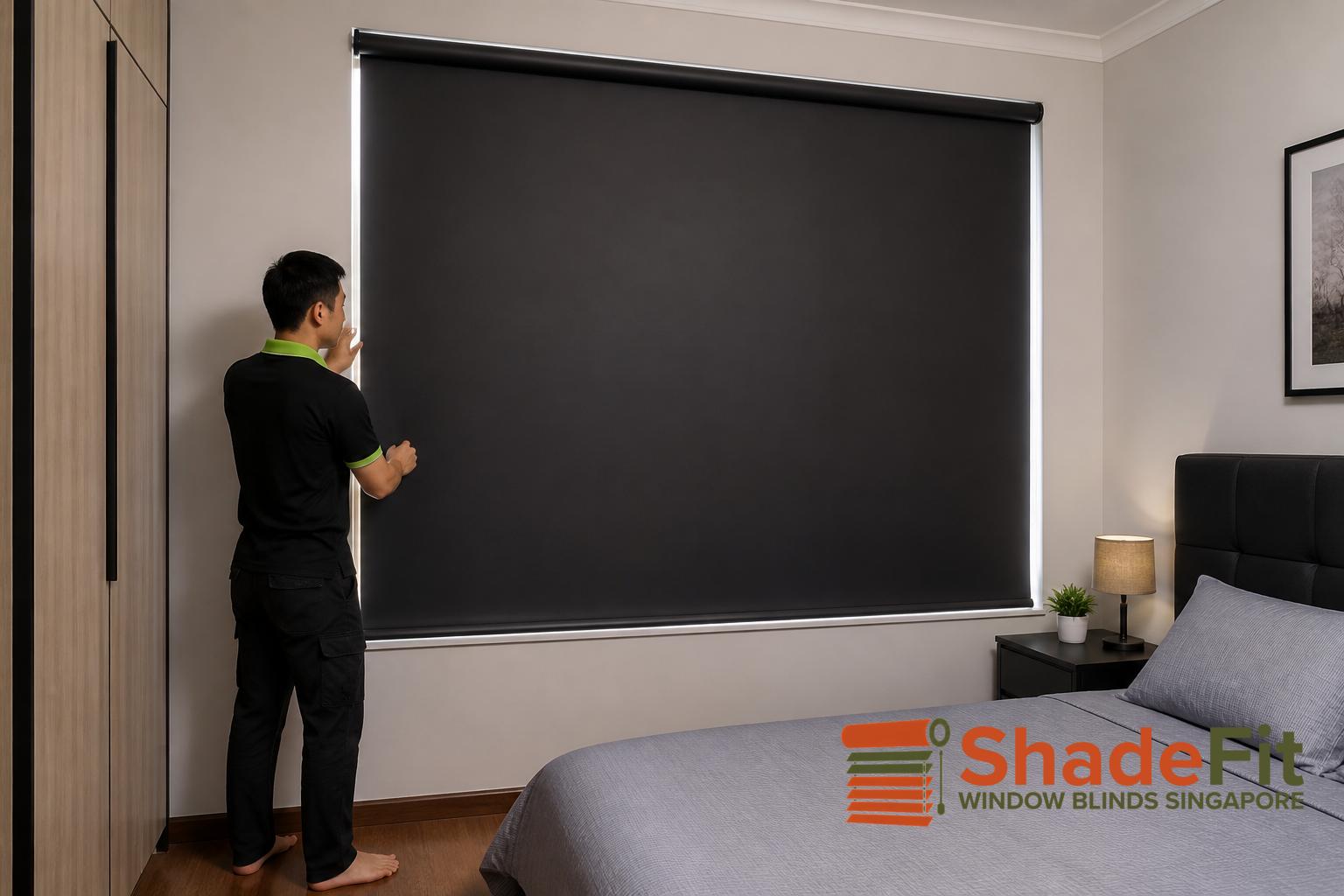
Light gaps around blackout blinds are a common frustration for Singapore homeowners, especially in bedrooms, nurseries, media rooms and east- or west-facing spaces that catch strong sun. Even a small sliver of brightness along the sides, top or bottom can reduce the darkening effect you expect from blackout blinds, particularly in homes with bright corridor lighting, reflective neighbouring buildings or early morning sunlight. The good news is that many of these gaps can be reduced with the right blind type, better fitting, and a few practical installation choices.
Why light gaps happen with blackout blinds
Blackout blinds are designed to block most incoming light, but they do not automatically create a sealed, fully dark room. Light gaps usually appear where the blind does not sit flush against the window frame, or where the blind is mounted in a way that leaves exposed edges. In Singapore homes, this can be more noticeable because windows often face strong daylight for long periods, and many estates have compact room layouts where even a narrow gap becomes obvious.
Common causes include incorrect measurements, shallow recess depth, uneven walls, protruding handles, curtain tracks, or a blind that is simply too narrow for the window opening. In some cases, the issue is not the fabric itself, but the way the blackout blind is installed and the amount of coverage around the edges.
Choose the right mounting style for the window
One of the most effective ways to reduce light gaps is to choose the most suitable mounting style. A blackout blind fitted inside the recess can look neat, but it may leave small side gaps if the window frame is not perfectly square or if the recess is too shallow. An outside mount, where the blind overlaps the window opening by a wider margin, usually helps reduce visible light at the edges.
For many Singapore bedrooms, an outside-mounted blackout blind works well because it provides more coverage above, below and to the sides of the glass. This is especially useful for HDB and condominium windows where frames, grilles or ledges can interfere with a snug fit. The key is to ensure the blind is sized generously enough to cover the opening without looking oversized or awkward.
Use side channels or edge seals for better coverage
If you want a darker room, side channels can make a significant difference. These slim guides sit along the sides of the window and help the blackout blind run closer to the frame, reducing the amount of light that leaks in from the edges. They are especially useful for rooms used for sleeping during the day, shift workers’ bedrooms or home theatre setups.
Some blackout blind systems also use edge seals or fitted trims that help minimise gaps between the blind and the wall. While not every home needs these extras, they can be a practical solution where daylight is particularly strong or where the window frame shape makes a standard blind less effective.
Improve measurements before installation
Accurate measurement is one of the most important steps in reducing light gaps. Even a few millimetres can affect how well a blackout blind covers the window. Measure the width at the top, middle and bottom of the opening, as walls and frames are not always perfectly even. The same applies to height, especially if the sill, handle or floor level creates an obstruction.
For Singapore homeowners, it is also useful to check for features such as window grilles, aluminium frames, built-in ledges and air-conditioning trunking. These can change how the blind should be positioned. A well-measured blackout blind should account for these details so that it sits as close as possible to the opening and does not leave avoidable light paths.
Pick blackout materials that suit the room
Not all blackout fabrics behave exactly the same way. Some are thicker and more opaque, while others rely on a coated backing to block light. For rooms where dimness matters most, choose a blackout material that is designed to minimise visible pinholes and glow-through, particularly when sunlight is intense.
In bedrooms, a fuller blackout fabric may be preferred for better sleep conditions. In living areas or study rooms, homeowners may want a balance between light control and a softer appearance. The right material should work with the room’s purpose, window direction and privacy needs, rather than focusing on darkness alone.
Combine blackout blinds with other window-covering layers
In some homes, the best way to reduce light gaps is not to rely on one blind alone. Layering a blackout blind with another window-covering element can help improve coverage and reduce stray light from the sides. For example, a sheer or day curtain placed over the blind may soften visible gaps and improve the overall finish of the window.
This approach can also be helpful in rooms where the blind is used frequently and needs to remain practical during the day. The blackout blind handles light blocking, while the outer layer improves aesthetics and adds another level of coverage. For homeowners who prefer a cleaner, more minimal look, careful installation and a wider blind profile may be enough on their own.
Pay attention to window shape, frames and room use
Different rooms call for different solutions. A master bedroom in a west-facing condominium may need stronger edge control than a study room that only needs moderate shade. Similarly, oddly shaped windows, bay windows or windows with protruding fittings may require a more tailored blackout blind solution to avoid daylight creeping in from the corners.
It is also worth considering how the room is used. A nursery may need better blackout performance during naps, while a home cinema space may need the darkest possible result. In these situations, the blind’s fit, coverage and installation method matter just as much as the fabric choice.
Keep the blind and frame in good condition
Even a properly fitted blackout blind can develop gaps over time if the fabric stretches, the bracket shifts or the blind is not aligned correctly. Regular checks help ensure the blind still sits evenly and rolls or folds as intended. Dust, wear and loose fittings can affect how close the blind remains to the frame.
Cleaning the frame and blind edges also helps maintain performance. If dirt or debris stops the blind from lying flat, light can enter more easily. A small adjustment, tightening of brackets or replacement of worn components may be enough to restore better coverage.
If you are comparing blackout blind options for a bedroom, nursery or sun-facing room, WhatsApp ShadeFit Window Blinds Singapore – Venetian & Roller Blinds to discuss suitable blackout blind options and request a quotation based on your window size, property type, sunlight direction, privacy needs and installation requirements: Send a WhatsApp message.
Conclusion
Reducing light gaps around blackout blinds in Singapore usually comes down to three things: better measurement, better coverage and better installation. By choosing the right mounting style, using side channels where needed, selecting suitable materials and matching the blind to the room’s layout, homeowners can significantly improve light control without compromising the look of the space. For many homes, a few careful adjustments can make the difference between a room that feels merely shaded and one that feels properly dark.
Choose ShadeFit Window Blinds Singapore – Venetian & Roller Blinds
ShadeFit Window Blinds Singapore – Venetian & Roller Blinds Singapore offers a range of products and service options suited to different window sizes, room uses and interior preferences. We help homeowners select window blinds based on the direction of sunlight, the level of privacy required and the overall look of the space. Our blinds selection includes roller blinds for a clean and practical finish, while venetian blinds allow homeowners to adjust the direction of incoming light. Combi blinds, Korean blinds and Shangri-la blinds offer layered designs for homeowners who want to balance light, privacy and appearance. Smart blinds and motorised blinds provide more convenient everyday control, particularly for wide or difficult-to-reach windows. Careful measurement and professional installation help ensure the selected blinds are fitted neatly and correctly.
For homeowners who prefer a softer window finish, our curtains selection includes blackout curtains for stronger light coverage, a day curtain and night curtain combination for flexible privacy, and dim out curtains for a gentler level of light control. Smart curtains and motorised curtains make daily adjustments easier and more convenient.
View our completed projects and read our blog before choosing what works best for your space and WhatsApp us at +65 8241 0032 today to discuss your window requirements to receive suitable recommendations.
Frequently Asked Questions
Can blackout blinds block all light completely?
Blackout blinds can block most light, but a completely dark room is not always guaranteed. Small gaps may still appear around the edges, top or bottom depending on the fit, mounting style and window structure. Adding wider coverage or side channels can improve the result.
Are outside-mounted blackout blinds better than inside-mounted ones?
Outside-mounted blackout blinds often reduce light gaps more effectively because they cover a wider area around the window opening. They are a practical choice when the recess is shallow, uneven or interrupted by handles, grilles or other fittings.
What should I check before ordering blackout blinds for my home?
Check the exact window dimensions, frame depth, nearby obstructions, sunlight direction and how dark you want the room to be. It also helps to consider whether the space is a bedroom, nursery or study, as this affects how much light control you need.
